
New LMIA Rules in 2026

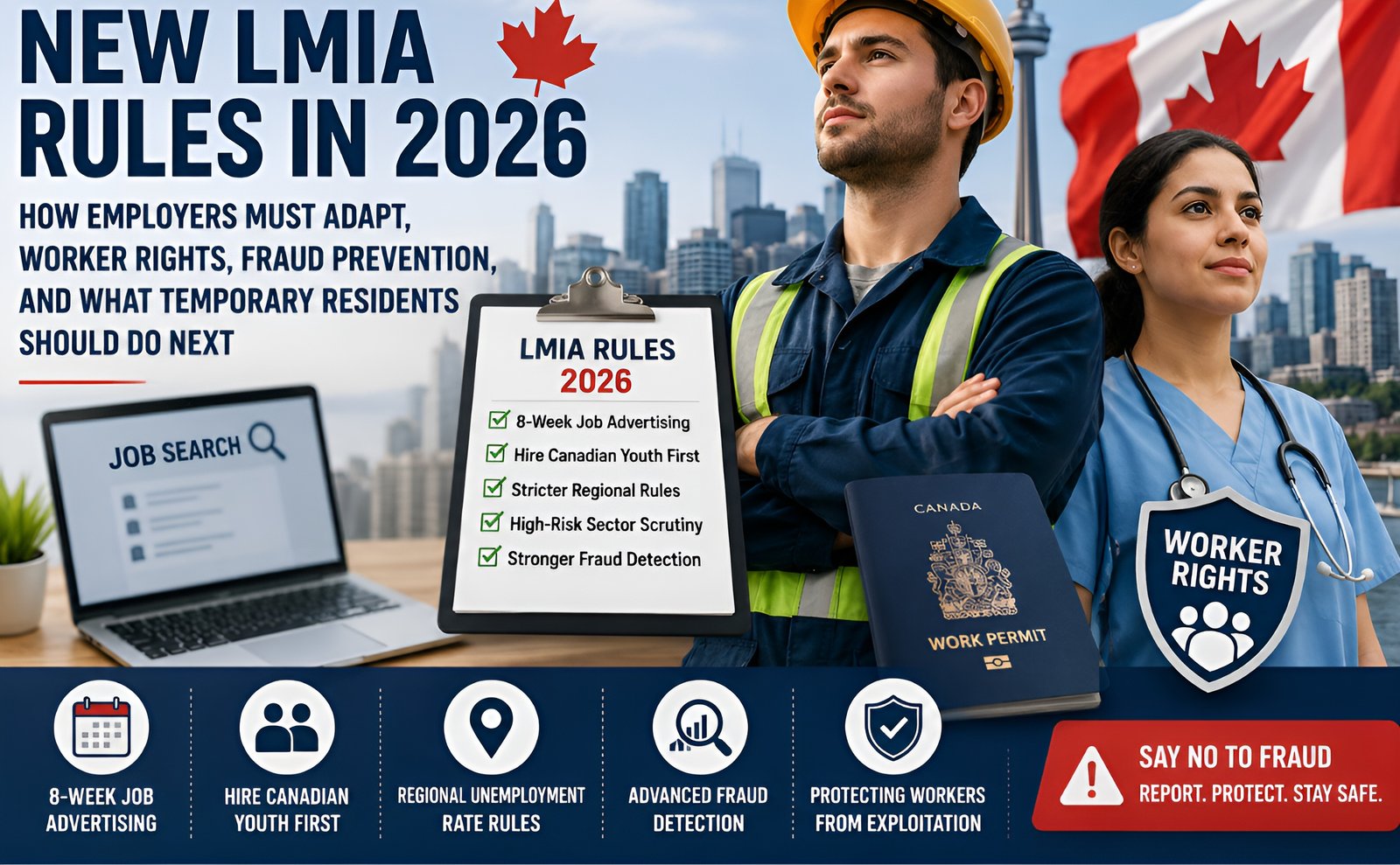
What Employers and Foreign Workers Need to Know to Stay Compliant
Disclaimer: This article is for informational purposes only and does not constitute legal or immigration advice. Immigration rules, program criteria, and processing practices can change without advance notice. Applicants should always verify the latest requirements directly with IRCC or a licensed immigration professional.
Canada’s immigration system is evolving rapidly, and one of the biggest changes in 2026 is the tightening of Labour Market Impact Assessment (LMIA) requirements.
For years, the Temporary Foreign Worker Program (TFWP) has helped Canadian employers address labour shortages while creating employment opportunities for qualified international workers. However, concerns over labour market abuse, fraudulent recruitment practices, and increasing competition for employer-sponsored work permits have prompted the federal government to introduce stronger safeguards.
The new rules are designed to ensure that Canadian employers genuinely attempt to hire local workers before recruiting internationally while protecting foreign workers from exploitation and strengthening public confidence in Canada’s immigration system.
For both employers and workers, understanding these changes is essential to avoid costly mistakes and maintain compliance.
Why Canada Is Tightening LMIA Requirements
The Labour Market Impact Assessment remains one of the most important components of Canada’s employer-specific work permit system.
Before hiring a foreign worker in most occupations, employers must demonstrate that they have made reasonable efforts to recruit qualified Canadians or permanent residents.
In 2026, the government introduced several measures intended to improve the integrity of the program by making the recruitment process more rigorous and transparent.
These changes are also part of Canada’s broader effort to balance labour market needs with domestic employment opportunities, particularly as economic conditions and unemployment rates continue to fluctuate across different regions.
Eight-Week Job Advertising Is Now Required
One of the most significant changes affects employers applying under the Low-Wage LMIA Stream.
Previously, employers generally needed to advertise a position for at least four consecutive weeks before submitting an LMIA application.
Beginning in 2026, that requirement has doubled.
Employers must now advertise eligible positions for eight consecutive weeks before applying.
The extended recruitment period gives Canadian job seekers additional time to apply and allows Service Canada to better assess whether employers have made genuine efforts to recruit locally.
For employers, this means workforce planning has become even more important.
Businesses experiencing seasonal hiring needs or urgent labour shortages should begin recruitment earlier to account for the longer advertising timeline.
Greater Focus on Hiring Canadian Youth
Another major change requires employers to demonstrate meaningful efforts to recruit young Canadians before hiring foreign workers under the low-wage stream.
Employers are now expected to:
- Advertise through appropriate recruitment channels.
- Consider Canadian youth applicants.
- Document recruitment activities.
- Explain why qualified domestic applicants were not hired.
This additional documentation becomes part of the LMIA assessment process and helps immigration officers evaluate whether employers have met federal recruitment expectations.
Stronger Data Sharing Between Government Systems
Canada has also strengthened coordination between the federal Job Bank and the Temporary Foreign Worker Program.
This enhanced information sharing allows processing officers to better understand:
- Local labour market conditions.
- Available Canadian job seekers.
- Employment Insurance recipient data.
- Regional recruitment patterns.
The goal is to improve decision-making while reducing opportunities for misuse of the LMIA process.
High-Risk Industries Face Increased Scrutiny
Not every industry faces the same level of review.
Government agencies are directing additional compliance resources toward sectors where previous inspections identified a greater likelihood of violations.
Industries receiving closer attention include:
- Retail.
- Restaurants and food services.
- Accommodation and hospitality.
- Long-haul trucking.
- Construction.
- Agriculture.
- Manufacturing.
Employers operating in these sectors should expect more detailed document reviews and a greater possibility of compliance inspections.
Maintaining complete employment records and following labour standards is more important than ever.
How Unemployment Rates Now Influence LMIA Applications
Another important change involves regional unemployment levels.
Under updated rules, many low-wage LMIA applications may not be processed in metropolitan areas where unemployment reaches 6% or higher.
This policy reflects the government’s objective of encouraging employers to hire available domestic workers whenever possible.
However, several important occupations remain exempt from these restrictions.
Exemptions may apply to sectors such as:
- Healthcare.
- Agriculture.
- Food manufacturing.
- Construction.
- Caregiving.
- Permanent residence support occupations.
- Certain short-duration positions.
Employers should review current eligibility requirements before preparing an LMIA application, as regional labour market conditions can change throughout the year.
Advanced Technology Is Helping Detect Program Misuse
Canada is increasingly relying on technology to identify potential abuse before work permits are issued.
Instead of waiting until after workers arrive, government departments now use advanced analytics to identify higher-risk applications during the assessment process.
Information may be reviewed alongside:
- Previous inspection results.
- Anonymous tips.
- Historical compliance records.
- Recruitment patterns.
- Industry-specific risk indicators.
This proactive approach allows authorities to focus investigative resources where concerns are most likely to exist while helping protect legitimate employers and workers.
Understanding LMIA Fraud: Protect Yourself From Illegal Job Offers
Unfortunately, increased competition for employer-sponsored work permits has also created opportunities for dishonest individuals to exploit vulnerable applicants.
Across Canada, authorities continue to investigate reports involving:
- Fake job offers.
- Fraudulent LMIA approvals.
- Payments requested in exchange for employment.
- Misleading immigration promises.
It is important to remember that purchasing an LMIA or paying someone for guaranteed employment is illegal and could jeopardize your immigration future.
If an offer sounds too good to be true, it deserves careful scrutiny.
Common warning signs include:
- Guaranteed work permits regardless of qualifications.
- Requests for large cash payments before employment begins.
- Employers unwilling to provide written contracts.
- Recruiters refusing to explain the hiring process.
- Pressure to act immediately without proper documentation.
Legitimate Canadian employers follow established recruitment procedures and should never require foreign workers to pay for an LMIA approval.
Know Your Rights as a Temporary Foreign Worker
Every temporary foreign worker in Canada has legal rights, regardless of occupation or immigration status.
Workers are entitled to:
- A safe and respectful workplace.
- Wages consistent with their employment agreement.
- Protection under applicable labour laws.
- Freedom from abuse, intimidation, or exploitation.
- Access to information about their employment conditions.
Employers participating in the Temporary Foreign Worker Program must comply with both federal program requirements and provincial or territorial employment standards.
Failure to do so may result in significant financial penalties, program bans, or additional enforcement actions.
What If You Experience Workplace Abuse?
Some foreign workers remain in difficult working conditions because they fear losing their legal status.
However, Canada provides protections for workers experiencing abuse or exploitation.
Eligible individuals may qualify for an Open Work Permit for Vulnerable Workers, which may allow them to leave an abusive employer while maintaining legal authorization to work in Canada.
Workers who believe their rights have been violated should document their concerns and seek assistance through official government channels or qualified immigration professionals.
Practical Advice for Employers
Employers using the Temporary Foreign Worker Program should consider the following best practices:
- Begin recruitment well before staffing shortages become critical.
- Keep detailed records of all recruitment efforts.
- Ensure employment contracts accurately reflect job duties and wages.
- Maintain complete payroll and workplace documentation.
- Cooperate fully during compliance inspections.
- Stay informed about changing federal requirements.
Strong compliance practices help protect both businesses and employees while reducing the risk of penalties.
Practical Advice for Temporary Residents
If your work permit will expire in 2026 or beyond, planning early is essential.
Consider the following steps:
- Review your current immigration status.
- Understand your permit expiry date.
- Explore all available immigration pathways.
- Speak with your employer about future employment plans.
- Improve your language scores if pursuing permanent residence.
- Avoid unauthorized recruiters or individuals promising guaranteed immigration success.
Waiting until the final weeks before a permit expires may significantly reduce your available options.
Final Thoughts: Compliance Protects Everyone
Canada continues to rely on international talent to support economic growth, healthcare, construction, technology, agriculture, and many other sectors.
At the same time, the government is sending a clear message: the Temporary Foreign Worker Program must operate fairly, transparently, and in accordance with Canadian law.
The new LMIA measures are not intended to discourage legitimate employers or skilled workers. Instead, they aim to strengthen public confidence by ensuring opportunities are based on genuine labour market needs rather than abuse or fraudulent practices.
For employers, compliance has become an essential part of workforce planning.
For temporary residents, understanding your rights, recognizing fraud, and preparing early can make a significant difference in your immigration journey.
At ImmigrantResource.ca, we remain committed to helping newcomers navigate Canada’s immigration system with reliable information, practical guidance, and resources designed to support informed decisions every step of the way.
